Visions of Azerbaijan International magazine on Azerbaijan
search
Content
Spring 2009, Volume 4.1
Vision
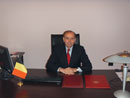
Visions of Azerbaijan magazine talks to one of the newer ambassadors in Baku, HE Mr Philippe Jottard, ambassador plenipotentiary and extraordinary of the Kingdom of Belgium to the Republic of Azerbaijan.
Mr Ambassador, how do you rate the current level of relations between Azerbaijan and the Kingdom of Belgium?
The political and economic relations between Belgium and ...more ››
Azerbaijan enjoys a strategic position with regard to energy supplies to Europe
Mr Ambassador, how do you rate the current level of relations between Azerbaijan and the Kingdom of Belgium?
The political and economic relations between Belgium and ...more ››
Art
Azerbaijani Imagery and Compassion in Harmony
A View of Togrul Narimanbayov´s work from Inside and Out
by Mohbaddin Samad
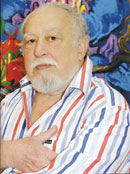
One of Azerbaijan´s best known artists is Togrul Narimanbayov. He uses themes from Azerbaijani folklore and traditional imagery in much of his work and is known equally for his portraits, large canvases and murals. Mohbaddin Samad, author of two books about the artist, tells Visions about Togrul Narimanbayov´s work.
Baku´s Inner, or Old, City may appear a disorderly jumble of streets at first sight, but is in fact a rare example of perfect oriental architecture. This ancient walled city, dubbed a ´unique open-air museum´, holds secrets and mysteries. Togrul Narimanbayov sees everything ...more ››
One of Azerbaijan´s best known artists is Togrul Narimanbayov. He uses themes from Azerbaijani folklore and traditional imagery in much of his work and is known equally for his portraits, large canvases and murals. Mohbaddin Samad, author of two books about the artist, tells Visions about Togrul Narimanbayov´s work.
Baku´s Inner, or Old, City may appear a disorderly jumble of streets at first sight, but is in fact a rare example of perfect oriental architecture. This ancient walled city, dubbed a ´unique open-air museum´, holds secrets and mysteries. Togrul Narimanbayov sees everything ...more ››
Literature
Obituary by the Union of Azerbaijani Writers
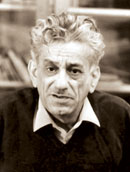
One of the great figures of Azerbaijani literature, People´s Poet Bakhtiyar Vahabzada died on 13 February at the age of 84.
People´s Poet Bakhtiyar Vahabzada, a prominent representative of Azerbaijani literature and 20th-century poetic thought in general, is famous in the republic and far beyond its borders as a poet and philosopher, lyrical dramatist, talented scholar and writer and fearless public figure. He is well known for his honesty, decency and sincerity. His works - poetry, plays and articles - have been translated into many languages, including English, French, German, Persian, Turkish, Polish, Spanish, Hungarian ...more ››
Bakhtiyar Vahabzada
One of the great figures of Azerbaijani literature, People´s Poet Bakhtiyar Vahabzada died on 13 February at the age of 84.
People´s Poet Bakhtiyar Vahabzada, a prominent representative of Azerbaijani literature and 20th-century poetic thought in general, is famous in the republic and far beyond its borders as a poet and philosopher, lyrical dramatist, talented scholar and writer and fearless public figure. He is well known for his honesty, decency and sincerity. His works - poetry, plays and articles - have been translated into many languages, including English, French, German, Persian, Turkish, Polish, Spanish, Hungarian ...more ››
Famous people
by Rovshan Didavari
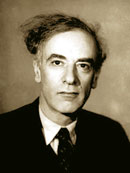
The year 2008 marked the centenary of the birth of physicist Lev Landau, a Nobel Prize laureate from Azerbaijan.
Lev Landau was born into a Jewish family in Baku on 22 January 1908. His father worked as an engineer in the oil fields and for a time the family lived in Balakhani, a village just outside Baku. When Lev reached school age, the family moved to the centre of the city, to a house at the intersection of Nizami and Samad Vurghun streets. A plaque on the Landaus´ former home says that prominent 20th century physicist and academic Lev Landau lived in the building until 1924. A street ...more ››
Lev Landau Baku's Nobel Prize Winner
The year 2008 marked the centenary of the birth of physicist Lev Landau, a Nobel Prize laureate from Azerbaijan.
Lev Landau was born into a Jewish family in Baku on 22 January 1908. His father worked as an engineer in the oil fields and for a time the family lived in Balakhani, a village just outside Baku. When Lev reached school age, the family moved to the centre of the city, to a house at the intersection of Nizami and Samad Vurghun streets. A plaque on the Landaus´ former home says that prominent 20th century physicist and academic Lev Landau lived in the building until 1924. A street ...more ››
History
by Dr. Suleyman Aliyarli
In the early medieval period and later, the Great Silk Road was a key economic factor connecting the empires of China, Byzantium and the Arab Caliphate, and dozens of countries that fell within the spheres of influence of these empires. This great network of cooperation covered southern and even northern parts of Europe too.
Within these immense boundaries, the Great Silk Road helped to develop towns, agriculture, private farming and silk production, and established land and sea transport routes. This was a unique economic process in the history of Eurasian civilization ...more ››
The Great Silk Road and trade between the Caspian and Europe
In the early medieval period and later, the Great Silk Road was a key economic factor connecting the empires of China, Byzantium and the Arab Caliphate, and dozens of countries that fell within the spheres of influence of these empires. This great network of cooperation covered southern and even northern parts of Europe too.
Within these immense boundaries, the Great Silk Road helped to develop towns, agriculture, private farming and silk production, and established land and sea transport routes. This was a unique economic process in the history of Eurasian civilization ...more ››
Baku
by Dr. Kamil Ibrahimov
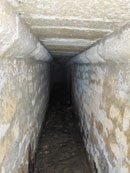
Restoration work in Vahid Park, the former Governor´s Park just outside the walls of Baku´s Old City on the Azneft side, has unearthed an underground passage. Archaeologist Dr Kamil Ibrahimov, senior researcher at the Old City State Historical and Architectural Reserve, looks at the history of the passage and what it tells us about the Old City´s water supply system.
First of all, it is important to identify the newly discovered underground passage in historical and archive maps and other sources ...more ››
Building Work Reveals More Of Baku's History
Restoration work in Vahid Park, the former Governor´s Park just outside the walls of Baku´s Old City on the Azneft side, has unearthed an underground passage. Archaeologist Dr Kamil Ibrahimov, senior researcher at the Old City State Historical and Architectural Reserve, looks at the history of the passage and what it tells us about the Old City´s water supply system.
First of all, it is important to identify the newly discovered underground passage in historical and archive maps and other sources ...more ››
Culture
by Prof. G.G. Mammadova
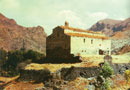
The ancient land of Azerbaijan has beautiful examples of the art of construction from many periods. Azerbaijani craftsmen enriched Eastern architecture with their priceless creations, which include the Maiden Tower in Baku, the mausoleums in Naxcivan, the mosque ensembles ...more ››
Karabakh's Church Architecture
The ancient land of Azerbaijan has beautiful examples of the art of construction from many periods. Azerbaijani craftsmen enriched Eastern architecture with their priceless creations, which include the Maiden Tower in Baku, the mausoleums in Naxcivan, the mosque ensembles ...more ››
History
The Big Territorial Giveaway (II part)
How Azerbaijan Offered Part of its Land to Armenia
by Dr. Ismail Musayev
The region of Zangezur, bordering Iran, was given by Azerbaijan to Armenia in turbulent 1920. In his first article published in the last issue of Visions, Dr Ismail Musayev, Professor of Diplomacy at Baku State University, looked at the circumstances that led Azerbaijan ...more ››
Culture
by Dr. Rafael Huseynov
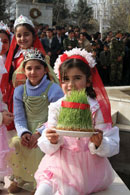
The Azerbaijani people have several holidays connected with agriculture and stock-rearing, which have been celebrated since time immemorial. But the holiday of Novruz, which marks the coming of a new astronomical year and the reawakening of nature, has always been the Azerbaijani people´s most cherished holiday. Novruz is celebrated every year on 20-21-22 March, from the moment of the vernal equinox. But according to tradition, people begin to prepare for this holiday from the last month of winter, continue the holiday celebrations with the arrival of the equinox and carry on celebrating into the New Solar Year ...more ››
Azerbaijani Novruz
The Azerbaijani people have several holidays connected with agriculture and stock-rearing, which have been celebrated since time immemorial. But the holiday of Novruz, which marks the coming of a new astronomical year and the reawakening of nature, has always been the Azerbaijani people´s most cherished holiday. Novruz is celebrated every year on 20-21-22 March, from the moment of the vernal equinox. But according to tradition, people begin to prepare for this holiday from the last month of winter, continue the holiday celebrations with the arrival of the equinox and carry on celebrating into the New Solar Year ...more ››
Culture
by Dr. Hasan Quliyev & Acad. Teymur Bunyadov
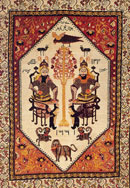
Traditionally Karabakh women were known for their colourful clothing and multi-layered skirts – they would wear eight to 10 skirts at once – while men’s clothes were less varied. The Karabakh diet was seasonal and closely linked to the agricultural year. In their second article for Visions of Azerbaijan magazine, Dr Hasan Quliyev and Academician Teymur Bunyatov look in more detail at the clothing, cuisine, family traditions and festivals of Karabakh in the late 19th and early 20th centuries. ...more ››
Life in Karabakh in the Late 19th and Early 20th Centuries
Traditionally Karabakh women were known for their colourful clothing and multi-layered skirts – they would wear eight to 10 skirts at once – while men’s clothes were less varied. The Karabakh diet was seasonal and closely linked to the agricultural year. In their second article for Visions of Azerbaijan magazine, Dr Hasan Quliyev and Academician Teymur Bunyatov look in more detail at the clothing, cuisine, family traditions and festivals of Karabakh in the late 19th and early 20th centuries. ...more ››
Environmental
by Fiona Maclachlan
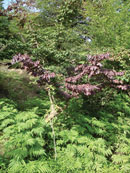
Hirkan National Park lies in the south of Azerbaijan. I first heard of it when I found out that there are leopards in Azerbaijan. A little bit of digging on the Internet threw up a few tantalising articles and I decided that one day I would like to visit Hirkan Park, home to Persian leopards. It was not so much seeing the leopards face to face, as the idea of being somewhere where leopards live that was enticing ...more ››
Hirkan, Home to the Leopard
Hirkan National Park lies in the south of Azerbaijan. I first heard of it when I found out that there are leopards in Azerbaijan. A little bit of digging on the Internet threw up a few tantalising articles and I decided that one day I would like to visit Hirkan Park, home to Persian leopards. It was not so much seeing the leopards face to face, as the idea of being somewhere where leopards live that was enticing ...more ››
Art
by Ian Peart & Saadat Ibrahimova
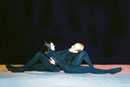
´God created people without words - he gave them movement, and people understood without words. Thoughts could not be hidden. The people asked God for help, "We need to be able to hide our thoughts," so God gave them words ...more ››
Mime - a Way Without Words
´God created people without words - he gave them movement, and people understood without words. Thoughts could not be hidden. The people asked God for help, "We need to be able to hide our thoughts," so God gave them words ...more ››
Art
by Aydin Kazimzada
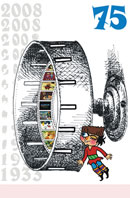
´Animation knows no borders - it has already crossed the border of fantasy. ´This saying gets to the heart of animated film. Across the world, the inexhaustible imagination of artists brings inanimate objects to life and makes animals speak on screen. Children in particular love animated films, which play an important role in their intellectual and emotional development.
Strange though it may sound, the history of animated film can be traced own the centuries. Thousands of years ago people wanted to see humans, animals and boats move and created line drawings of them in caves and on cliff walls. In Azerbaijan, many ancient rock drawings have ...more ››
Animation Knows No Borders Azerbaijani Cartoons Turn 75
´Animation knows no borders - it has already crossed the border of fantasy. ´This saying gets to the heart of animated film. Across the world, the inexhaustible imagination of artists brings inanimate objects to life and makes animals speak on screen. Children in particular love animated films, which play an important role in their intellectual and emotional development.
Strange though it may sound, the history of animated film can be traced own the centuries. Thousands of years ago people wanted to see humans, animals and boats move and created line drawings of them in caves and on cliff walls. In Azerbaijan, many ancient rock drawings have ...more ››
Culture
by Ilkin Akbarzade
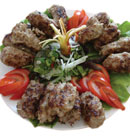
Our ancestors used to thread their prey onto skewers and grill it over a fire. This culinary technique has survived and improved over thousands of years.
The arguments and disputes over the origin of kebabs have gradually fallen silent. Initially, everyone seemed to agree that kebabs were invented by Turks. The word ´kebab´ is of Arabic origin and means ...more ››
The Historic Kebab
Our ancestors used to thread their prey onto skewers and grill it over a fire. This culinary technique has survived and improved over thousands of years.
The arguments and disputes over the origin of kebabs have gradually fallen silent. Initially, everyone seemed to agree that kebabs were invented by Turks. The word ´kebab´ is of Arabic origin and means ...more ››